Spatial Scale
Confirm minimum passage width, turning radius, obstacle density and takeoff/landing space before selecting airframe size and protection.
 Contact Us ↗
I5 uses a full cage and compact airframe for tight, obstacle-dense spaces; I7 covers metro tunnels and large open spaces with longer no-load endurance, higher payload and multi-directional mounting.
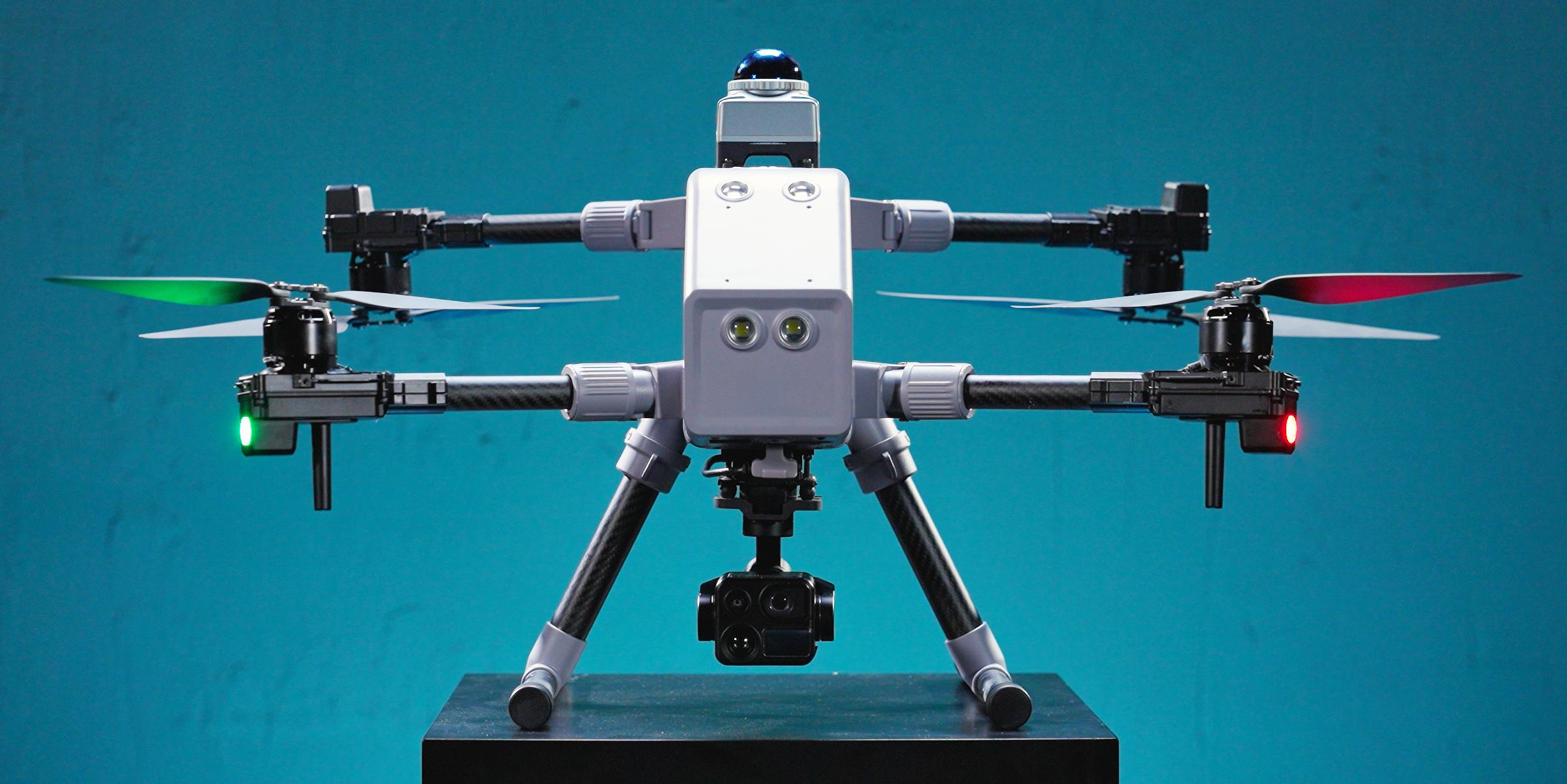
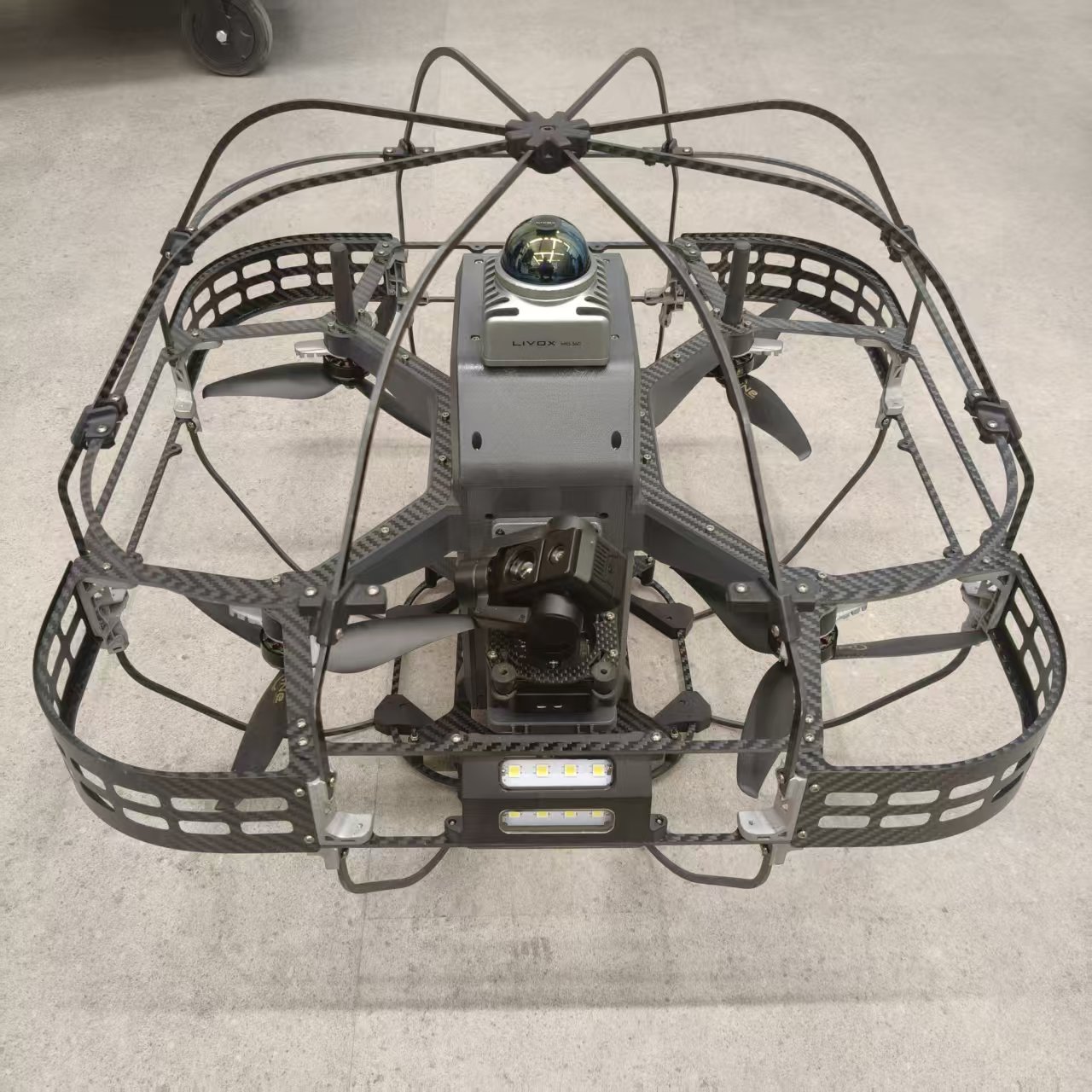
Confined spaces differ not only in area, but also in minimum passage width, route length, obstacle density, airflow, low light, communication obstruction and required payload. I5 and I7 cover complementary scenarios through different airframe sizes, protection, endurance and payload capability.
Aircraft type and configuration should be determined after site survey and prototype validation. Website parameters support preliminary selection and do not replace project technical agreements.
Confirm minimum passage width, turning radius, obstacle density and takeoff/landing space before selecting airframe size and protection.
Assess endurance from per-sortie coverage, hover time, payload weight and return reserve.
Confirm payload, mounting position and power/communication interfaces according to imaging, ranging, lighting and acquisition tasks.
Assess collision, dust, dripping water, airflow, communication obstruction and coexistence with personnel and equipment.
I5 / COMPACT CAGEA full cage surrounds the propellers for observation and imaging in narrow passages, near-wall areas and obstacle-dense confined spaces. The compact airframe, indoor positioning and multi-angle forward lighting support close-range inspection.
A cage surrounds the airframe and propellers for near-wall, narrow-passage and obstacle-dense environments.
470 × 470 × 370 mm, suitable for relatively tight inspection spaces after safety clearance is confirmed.
LiDAR SLAM and optical-flow sensors provide a positioning and navigation foundation without satellite signals.
Forward, upper-forward and lower-forward lighting supports observation and imaging in low light.
Its larger platform and 39-minute no-load endurance make I7 suitable for longer routes or open spaces such as metro tunnels, large plants and warehouses. Folding construction, upper/lower gimbal mounting and multi-directional lighting support field configuration.
Maximum no-load endurance of 39 minutes for longer routes and larger coverage.
Maximum payload of 1.5 kg with upper and lower gimbal mounting for different viewing directions.
Foldable arms and propellers, with optional propeller guards for transport and field protection.
Upper, lower, forward and upper-oblique lighting configurations for tunnels and large low-light spaces.
I7 / LONG ENDURANCEEquipment interlayers, narrow passages and partially enclosed structures where airframe envelope and minor-contact risk must be controlled.
Tunnel inspection with longer routes, wider coverage and greater endurance, lighting and payload requirements.
Large plants, warehouses and wide-span indoor spaces suited to longer periodic inspection sorties.
Aircraft selection, payload configuration, positioning validation and safety strategy must be completed as a whole; no single parameter replaces field validation.
Confirm passage dimensions, obstacles, lighting, communication, personnel activity and restricted areas.
Select I5 or I7 and camera/lighting configuration based on space, endurance, payload and protection requirements.
Build a site map and plan/review routes, waypoints and mission actions in ARP.
Check batteries, propellers/protection, sensors, payload, communication and emergency plans.
Use AGS to view positioning, imagery, mission, battery and alerts, pausing or taking over when necessary.
Organize imagery, mission records and exceptions for platform review and reporting.
Carries positioning, imaging and lighting equipment to execute confined-space missions.
Organizes waypoints, routes and mission actions from the site map.
03 / MONITORConnects equipment, dispatches missions, monitors status and retains manual intervention.
04 / SOLUTIONCombines scenario, equipment, software, procedures and deliverables into a complete solution.
Parameters are based on current materials. Endurance, payload, wind resistance, video transmission, hover accuracy and protection depend on payload, environment, battery, communication and test conditions and are subject to confirmed specifications and delivery configuration.
LiDAR SLAM and optical flow form the positioning basis; actual performance depends on structural texture, dust, lighting, reflection and motion.
Cages or propeller guards do not replace passage-clearance checks; allow for attitude changes, airflow disturbance and positioning error.
Validate link coverage in obstructed and long-range spaces and configure hover, return, landing or manual intervention by project.
An IP rating does not indicate explosion protection or suitability for all dusty, corrosive or flammable environments; special locations require separate compliance confirmation.
We will help select I5 or I7, positioning and lighting configuration, mission software and validation plan based on site conditions.
Last updated